
Versión en texto
Atención informada por el estado hormonal en mujeres con psicosis
El posible efecto protector de los estrógenos frente a la psicosis ha sido descrito ampliamente en estudios científicos y epidemiológicos. Probablemente recuerde este fenómeno a propósito del segundo pico de incidencia de la esquizofrenia específico del sexo femenino, que ocurre más tarde en la vida, en torno a la perimenopausia, cuando los niveles de estrógenos descienden.
¿Cómo debería este conocimiento influir en su toma de decisiones clínicas? ¿De qué manera interactúan los estrógenos con el tratamiento estándar de la psicosis? ¿Y cuándo deberían ser ellos el tratamiento? Una revisión reciente publicada en Lancet Psychiatry arrojó luz sobre el papel de las hormonas ováricas en la psicosis y ofrece recomendaciones para incorporar esta información a la práctica clínica y brindar una atención informada por el estado hormonal.
Descargar el PDF y otros archivos
La exacerbación perimenstrual de la psicosis difiere del TDPM
Los autores de este estudio realizaron una revisión narrativa con el objetivo de describir la relación entre el ciclo menstrual y los síntomas psicóticos, las formas en que las hormonas ováricas pueden influir en los tratamientos antipsicóticos y ser influidas por ellos, y el papel de los tratamientos basados en estrógenos en el manejo de la psicosis. Varios de sus planteamientos me llamaron especialmente la atención.
Los autores describieron que los síntomas psicóticos tienden a empeorar y el riesgo de hospitalización aumenta durante la fase perimenstrual. Esta fase comprende un período de cuatro a seis días de la fase lútea tardía y la fase folicular temprana, cuando tanto los estrógenos como la progesterona se encuentran en sus niveles más bajos. En términos sencillos, yo describiría esto a los pacientes como los pocos días antes y después del inicio de su menstruación.
Cabe destacar que este patrón de exacerbación es distinto del que clásicamente se describe y enseña para el trastorno disfórico premenstrual (TDPM). En el TDPM, los síntomas del estado de ánimo empeoran en la fase lútea, y el inicio de la fase folicular con la menstruación trae alivio, con frecuencia de forma casi inmediata.
Seguimiento prospectivo de síntomas a lo largo de los ciclos
Para las pacientes con presunta fluctuación sintomática ligada al ciclo menstrual, los autores recomiendan el seguimiento prospectivo de síntomas a lo largo de dos a tres ciclos menstruales utilizando instrumentos como el Registro Diario de Severidad de Problemas (DRSP, por sus siglas en inglés). El DRSP no cuenta en realidad con una categoría específica para síntomas psicóticos, por lo que usted y la paciente deberían añadir una.
Comparto esta recomendación y quisiera enfatizar que, al interpretar los datos, la persistencia de la exacerbación psicótica durante los primeros días del ciclo menstrual reforzaría su hipótesis, en lugar de invalidarla.
Descargar el PDF y otros archivos
Los niveles hormonales rara vez orientan el tratamiento
Con frecuencia me preguntan sobre la utilidad de solicitar niveles hormonales en estas pacientes como parte de la evaluación. A partir de esta revisión, y en concordancia con mi experiencia clínica, la respuesta es, en general, negativa. En la psicosis, al igual que en otras exacerbaciones del estado de ánimo relacionadas con el ciclo menstrual, la exacerbación sintomática parece estar más vinculada a la sensibilidad individual a las fluctuaciones hormonales que a concentraciones absolutas anormales.
Si bien algunos estudios han mostrado que los niveles de estrógenos son más bajos en mujeres premenopáusicas con psicosis que en controles sanas, este hallazgo no es claramente independiente de las tasas más elevadas de uso de antipsicóticos que elevan la prolactina, y no modificaría mi toma de decisiones clínicas.
Los antipsicóticos que respetan la prolactina son preferidos como primera línea
Si bien no recomendaría solicitar niveles hormonales en sangre para elaborar el plan de tratamiento, sí considero que las pacientes pueden beneficiarse de una estrategia terapéutica que minimice la supresión y las fluctuaciones de estrógenos.
Los antipsicóticos que respetan la prolactina, como aripiprazol, son preferidos como primera línea en mujeres con psicosis no afectiva según las guías de consenso internacionales, debido a su perfil global de efectos adversos. Como señala esta revisión, también tienen la ventaja adicional de ser menos propensos a precipitar síntomas hipogonádicos y alteraciones menstruales.
Evaluar y tratar la hiperprolactinemia es importante. Los autores recomiendan cambiar a un agente que respete la prolactina o agregar aripiprazol a dosis bajas como adyuvante si se desarrolla hiperprolactinemia, en lugar de simplemente reducir la dosis del medicamento actual.
Descargar el PDF y otros archivos
Los estrógenos inhiben el metabolismo mediado por CYP1A2
Otra conclusión importante de la revisión es que el metabolismo de varios antipsicóticos se ve afectado por los niveles de estrógenos. Los estrógenos, incluido el etinilestradiol contenido en los anticonceptivos orales combinados, ejercen un potente efecto inhibidor sobre el CYP1A2 que puede conducir a niveles plasmáticos más elevados de clozapina, olanzapina y, potencialmente, asenapina.
Si una paciente está tomando clozapina, olanzapina o asenapina, asegúrese de que su historia clínica incluya preguntas sobre la etapa reproductiva, la regularidad del ciclo menstrual y el tipo de anticonceptivo utilizado. Reevalúe cualquier cambio en esta información a lo largo del tiempo. Lo que implica en términos prácticos la interacción con los estrógenos es que, dentro de un mismo individuo, la misma dosis diaria de estos antipsicóticos podría resultar en niveles plasmáticos disminuidos en momentos en que sus niveles de estrógenos desciendan. Por ejemplo:
- Durante la fase perimenstrual del ciclo menstrual
- Durante la menopausia
- Tras la suspensión de un anticonceptivo oral combinado o de la terapia hormonal sustitutiva
Desde el punto de vista clínico, si síntomas previamente bien controlados reaparecen en estos contextos, considere la posibilidad de que la dosis haya disminuido efectivamente y deba aumentarse para mantener el mismo nivel plasmático. A la inversa, se recomienda iniciar clozapina a la mitad de la dosis de inicio habitual en mujeres que toman anticonceptivos orales combinados, con el fin de minimizar el riesgo de efectos adversos.
Dicho esto, los autores señalan que existen menos datos formales que respalden la necesidad de ajustes de dosis del antipsicótico durante el intervalo libre de hormonas de un anticonceptivo oral. Coincido en que reducir la dosis del antipsicótico durante esos días no parece clínicamente necesario para la mayoría de las pacientes, y que regímenes más complejos pueden afectar la adherencia.
Cuando las hormonas se convierten en el tratamiento
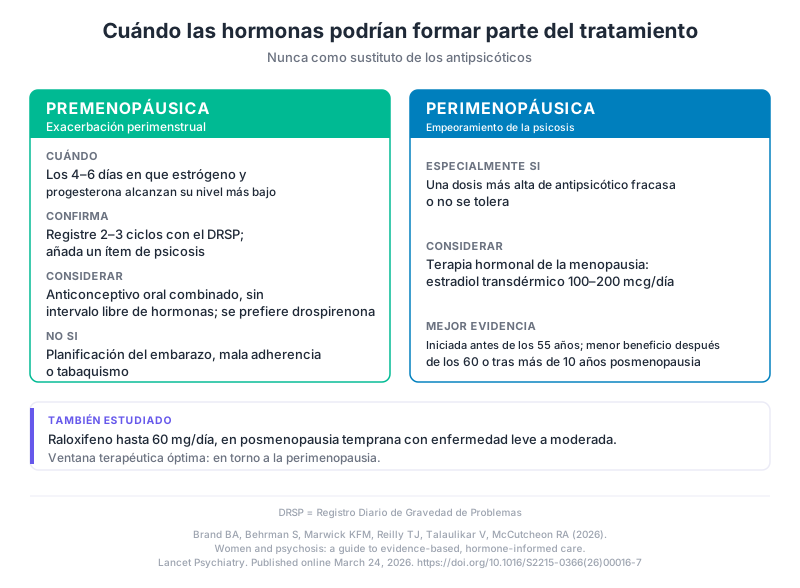
Si bien todos estos puntos abordan cómo las hormonas pueden interactuar con el tratamiento, una pregunta frecuente es cuándo o si las hormonas deberían ser el tratamiento. Los autores destacan que los tratamientos basados en estrógenos no son un componente estándar de la atención a mujeres con psicosis. Ciertamente, los tratamientos basados en estrógenos no deberían sustituir el papel de los antipsicóticos, pero existen algunos escenarios clínicos en los que podría considerarse incorporar el tratamiento hormonal al plan terapéutico.
Descargar el PDF y otros archivos
Anticonceptivos orales combinados en mujeres premenopáusicas
En mujeres premenopáusicas que experimentan exacerbaciones perimenstruales de síntomas, un anticonceptivo oral combinado utilizado sin intervalo libre de hormonas podría ser beneficioso en aquellas sensibles a las fluctuaciones hormonales. En estos casos, tiendo a recomendar preparados que contienen drospirenona.
No todas las pacientes serán candidatas apropiadas para este enfoque. Dos ejemplos son si la paciente desea concebir en el futuro próximo, o bien si quiere evitar un embarazo pero le resulta difícil adherirse a medicaciones diarias. La mayoría de los dispositivos intrauterinos (DIU) y otras opciones anticonceptivas de acción prolongada son de base progestágena y no se esperaría que confieran un beneficio potencial de la misma manera.
Si los objetivos anticonceptivos de la paciente no son compatibles con el uso de anticonceptivos orales combinados, priorizo la anticoncepción. Otra contraindicación frecuentemente encontrada que debe tener presente es el tabaquismo, que incrementa los riesgos cardiovasculares asociados a los anticonceptivos orales.
Terapia hormonal de la menopausia en la perimenopausia
En mujeres perimenopáusicas que experimentan un empeoramiento de los síntomas psicóticos, podría considerarse la terapia hormonal de la menopausia. Esto es especialmente válido si el aumento de la dosis del antipsicótico no es tolerado o no resulta eficaz, o si la paciente presenta otros síntomas que también podrían beneficiarse de la terapia hormonal de la menopausia, como los sofocos.
La revisión enfatiza que los datos más sólidos de beneficio en la psicosis provienen de ensayos que iniciaron el tratamiento antes de los 55 años y utilizaron parches de estradiol transdérmico de 100 a 200 mcg por día. Los datos son menos convincentes en mujeres mayores de 60 años o con más de 10 años desde su último período menstrual.
El raloxifeno, un agonista estrogénico en el cerebro y los huesos aprobado originalmente para el tratamiento de la osteoporosis, también cuenta con datos que sugieren que dosis de hasta 60 mg por día podrían ser beneficiosas en mujeres en posmenopausia temprana con enfermedad de leve a moderada. En conjunto, estos hallazgos indican una ventana terapéutica óptima en torno a la perimenopausia, lo cual se alinea con otros beneficios observados para la terapia hormonal de la menopausia.
Descargar el PDF y otros archivos
Atención informada por el estado hormonal sin necesidad de prescribir hormonas
Concluyo señalando que no es necesario comenzar a prescribir tratamientos hormonales por cuenta propia para incorporar una perspectiva hormonal a la conceptualización del caso y la planificación terapéutica. Cuando usted y la paciente consideren que podría beneficiarse de un tratamiento basado en estrógenos, la colaboración con el obstetra o el médico de cabecera de la paciente es un excelente punto de partida.
Abstract
Resumen del artículo original, reproducido en inglés.
Women and psychosis: a guide to evidence-based, hormone-informed care
Bodyl A Brand, PhD, Sophie Behrman, MRCPsych, Katie F M Marwick, MRCPsych PhDc ∙ Thomas J Reilly, MRCPsych, Prof Iris E C Sommer, MD PhD, Vikram Talaulikar, MD PhDd, et al.
Psychosis is associated with sex differences that are rarely considered in routine care. Oestrogen exerts protective effects, with symptom exacerbation and increased relapse risk occurring during low-oestrogen states, such as perimenstruation, postpartum, and menopause transition. Antipsychotic pharmacokinetics and response vary by sex and hormonal status, with premenopausal women requiring lower doses, and postmenopausal women showing reduced treatment efficacy. Antipsychotic-induced hyperprolactinaemia can suppress endogenous oestrogen, compounding both mental and physical health risks. Despite this, treatment guidelines remain largely sex neutral. This Review outlines the role of ovarian hormones in psychosis and offers practical considerations to support the first steps towards implementing hormone-informed care, providing a conceptual framework to guide clinical decision making with the aim of improving outcomes for women with psychosis across the lifespan. Key recommendations include thorough assessment of hormonal status, sex-specific prescribing, and the judicious use of oestrogen-based interventions such as hormonal contraception, hormone therapy, and oestrogen receptor modulators.
Descargar el PDF y otros archivos
Referencia
Brand, B.; Behrman, S.; Marwick, K.; Reilly, T.; Sommer, I.; Talaulikar, V. et al. (2026). Women and psychosis: a guide to evidence-based, hormone-informed care. The Lancet Psychiatry; 13(6):508-521.